Arlinda Gjypi
(Versioni shqip)
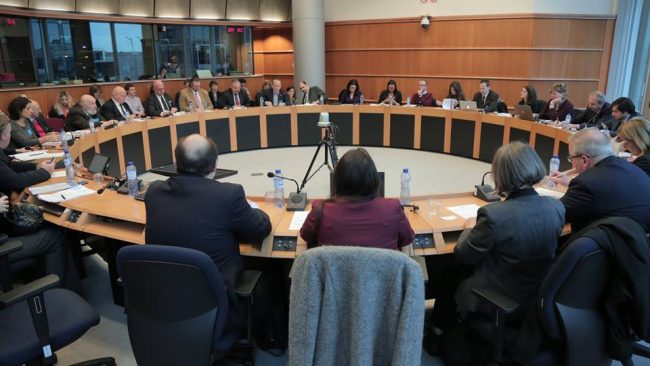
“Patients’ rights have no border… as well as risks”. This was the theme of the conference held on May 3rd, 2016 at the European Parliament, by Active Citizenship Network (ACN). The conference was attended by representatives of organizations for the protection of patients’ rights, as well as the representative of “Together for Life” organization from Albania.
Mariano Votta, ACN’s director, said that for the first time “patients’ rights” are a legal term. However, he stressed that despite the directive, the cross-border healthcare service was received by only 2% of EU citizens. For others to also benefit from this service the information is necessary. “The financial issue is a barrier for cross border health care. The danger lies in the fact that this service will be obtained only by those who have money. It is essential that everyone benefits from this directive. It is difficult to travel abroad for healthcare service. There are procedures, lack of information and many local institution do not give their permission”, said Votta. He stressed that the actual data indicate lack of information and data, necessary for the cross border healthcare to work.
Jo Maes, from European Patients Empowerment for Customized Solutions, Netherlands, spoke about what happens to citizens travelling abroad for treatments. “The movement of patients has a great impact on European economic development and furthermore it will lead to improving the health system of each EU state, because it encourages the governments to improve their own health systems”, said Maes.
Meanwhile, Paul Vincke, managing director of European Healthcare Fraud and Corruption Network, spoke about the risks that patients are exposed in cross border healthcare. “The patients that travel to receive healthcare in other countries of EU face the same risks as in their countries of origin, i.e. fraud, corruption, waste etc. These can cause economic and physical damage. That is because the health workers do not pay attention to the proper treatment or the treatment is too expensive. The fact that health systems pay for every service serves as a mean of abuse. So it happens that many patients are submitted to unnecessary invasive tests”, said Vincke. He also spoke for the economic damage that patients face in host countries: “It is not rare for patients to give money to health workers to get proper service. It also can happen that patients are not reimbursed because of problematic bills, that cost more than the patient can get by reimbursement fund. So it is needed for patients to get more information for the safest countries”.
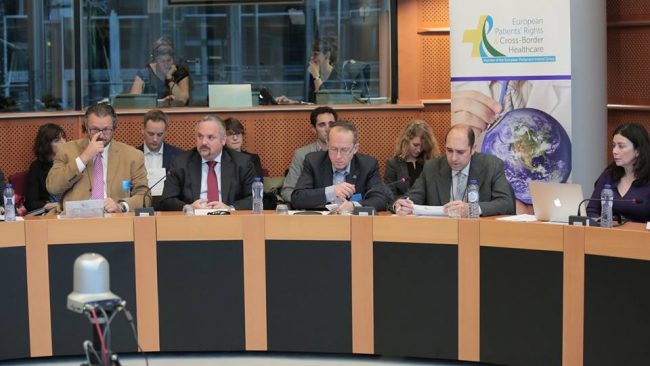
Catherine Donohoe, from Irish National Contact Point, spoke about other risks. “Many patients face in host countries the so called “hidden costs”, cost that are not explained from the beginning. Also, there have been cases of patients excepted in hospitals that do not offer the service the patient need”. She said that with this directive the complicate cases are increased by 30% due to increased cost of reimbursement.
In closing remarks, Antonio Guadioso, Secretary General of CittadinanzaAttiva said that the law itself is not enough. “It is very important the implementation of this law, to not let it return into a endless story”.